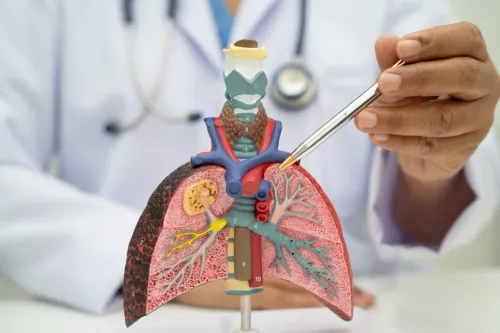

Chest pain with breathlessness or tightness can come from the lungs, heart, blood vessels, digestive system, or chest wall. You will learn which warning signs require emergency care, what a chest-pain doctor will assess, how testing is selected, and how to prepare for a safe appointment.
Key takeaways
- Call emergency services for severe chest pain or breathlessness at rest.
- Do not drive yourself during a suspected chest pain emergency.
- Record pulse oximeter readings with the time and your symptoms.
- Choose a chest specialist for persistent or recurring respiratory symptoms.
When Chest Pain and Breathlessness Need Emergency Care
If chest pain is new and breathing is difficult, call emergency services rather than book a routine appointment. This is a chest pain emergency when pain is severe, persistent, or comes with breathlessness at rest. Do not drive yourself; sit upright, unlock the door, and follow the dispatcher’s instructions.
Call now if you have:
- Blue or grey lips, fainting, confusion, clammy sweating, nausea, or extreme weakness.
- Pain spreading to your arm, jaw, back, or shoulder.
- Sudden one-sided chest pain with breathlessness, a fast heartbeat, or coughing blood.
- New breathlessness after surgery, prolonged immobility, pregnancy or recent childbirth, or with one swollen, painful leg.
- Severe wheezing, inability to speak full sentences, or rapidly worsening symptoms.
A scheduled chest-doctor appointment fits symptoms that are mild, stable, and recurring without these warning signs, such as exertional tightness that settles with rest or breathlessness developing over weeks. Arrange prompt medical review instead of self-diagnosing: heart disease, pulmonary embolism, pneumothorax, asthma, pneumonia, anemia, reflux, medication effects, and chest-wall pain can feel alike.
A normal chest X-ray does not rule out a heart attack, pulmonary embolism, or asthma. Searching for a blue lips chest pain doctor should never delay emergency care; see a chest pain doctor after urgent causes are excluded.
What Can Cause Chest Tightness, Pain and Breathing Difficulty?
Chest tightness causes range from narrowed airways to heart disease, blood clots, reflux and strained chest muscles. Asthma chest tightness often comes with wheezing, cough and exposure to dust, pollen, cold air or exercise. Pneumonia chest pain is usually sharp and worsens with deep breathing or coughing, with fever, sputum or feeling unwell.
| Cause | Pattern that points toward it | Where doctors investigate first |
|---|---|---|
| Asthma or bronchospasm | Episodic tightness, wheezing and variable breathlessness | Airways and spirometry |
| Pneumonia, pleurisy or pneumothorax | Fever and cough; pain with breathing; or sudden one-sided pain and breathlessness | Lungs and pleura, often with chest X-ray |
| Pulmonary embolism | Sudden breathlessness, sharp pain, fast pulse or coughing blood; risk rises after surgery, immobilisation, cancer, pregnancy or oestrogen use | Lung blood vessels, often with CT pulmonary angiography |
| Heart attack or heart failure | Pressure with exertion, sweating, nausea or pain spreading to the arm, jaw or back; heart failure adds swollen legs or breathlessness when lying flat | Heart and circulation |
| Reflux, costochondritis or muscle strain | Burning after meals, pain reproducible by pressing, or pain after lifting or injury | Digestive tract or chest wall |
Anxiety, dysfunctional breathing, anaemia and medication effects can also cause breathlessness without primary lung disease. A normal chest X-ray does not exclude pulmonary embolism, asthma, early interstitial lung disease or acute coronary syndrome.
New pain with breathlessness, fainting, blue lips, confusion or coughing blood needs urgent assessment rather than assumption that it is a lung problem.
What Will a Chest-Pain Doctor Ask and Test?
A first chest pain doctor consultation combines a symptom history, physical examination and targeted tests; no single normal result rules out every cause. The clinician will assess your breathing rate, pulse, blood pressure, oxygen level, temperature, heart sounds, lung sounds, leg swelling and chest-wall tenderness.
- When the pain started, where it is, and whether it feels sharp, burning, crushing or tight
- Whether breathing, movement or exertion changes it
- Cough, fever, wheezing, sputum or coughing blood
- Smoking exposure, recent surgery, immobility, pregnancy, cancer or previous clots
- Heart, lung and anaemia history, plus every current medicine
An ECG for chest pain is usually appropriate early when pain, breathlessness, sweating, faintness or exertional symptoms could indicate reduced blood flow to the heart. Blood tests can include troponin for heart-muscle injury, a complete blood count for anaemia or infection, and D-dimer when pulmonary embolism risk assessment supports it.
A chest X-ray can identify pneumonia, pleural fluid or pneumothorax, but a normal image does not exclude pulmonary embolism, asthma or acute coronary syndrome. Spirometry for asthma and COPD measures airflow after bronchodilator use; COPD requires a post-bronchodilator FEV1/FVC below 0.70 in the appropriate clinical context.
CT is chosen for suspected pulmonary embolism, small pneumothorax, nodules or interstitial disease. CT pulmonary angiography uses radiation and iodinated contrast, so kidney function, contrast allergy and pregnancy affect the decision. Echocardiography evaluates heart pumping, valves and pressure when examination or ECG suggests a cardiac cause.
How to Prepare and Use a Pulse Oximeter Safely
A pulse oximeter reading is a clue, not a diagnosis. Oxygen saturation can change with movement, cold fingers, poor circulation, nail polish, device error, altitude and an individual’s usual baseline. Do not use a reassuring number to dismiss severe chest pain, breathlessness at rest, blue or grey lips, fainting, confusion or coughing blood.
- To prepare for pulmonologist appointment, bring your medicines, inhalers, allergies, smoking history, previous reports and the oximeter itself. Include the device’s brand and model if available.
- Record each episode’s date, time, activity, position, chest pain or tightness, cough, wheeze, fever, sputum and breathlessness level. Note whether you used an inhaler and what changed afterward.
- Before measuring, sit quietly for five minutes, warm your hand, remove nail polish and keep the finger still. Wait for the numbers to settle, then record oxygen saturation, pulse rate and symptoms together.
- Take two readings one minute apart if the result seems unexpected. Write down your usual readings rather than relying on memory, and follow any personal target given by your clinician.
- Contact a clinician promptly if repeated home oxygen readings stay at or below 92%, or fall clearly below your normal level. Seek emergency care for serious symptoms, regardless of the reading; a normal result does not rule out a heart attack, pulmonary embolism or another dangerous cause.
Choosing the Right Specialist for Ongoing Respiratory Symptoms
A scheduled pulmonology appointment fits ongoing cough, wheeze, exertional breathlessness, recurrent chest infections, or chest tightness linked to triggers. Cough lasting more than eight weeks deserves assessment for asthma, reflux, medication effects, smoking exposure and other causes; coughing blood, weight loss, fever or abnormal imaging needs faster review.
Specialist choice depends on the pattern:
| Situation | Most suitable next step | Why |
|---|---|---|
| Severe or persistent pain, breathlessness at rest, blue lips, fainting, confusion, sweating, coughing blood, or pain spreading to the arm, jaw, back or shoulder | Emergency assessment | Heart attack, pulmonary embolism, pneumothorax and other dangerous conditions need immediate testing |
| Breathlessness or tightness during exertion with palpitations, leg swelling, faintness or pressure-like pain | Cardiologist or pulmonologist | Heart disease and lung disease can overlap; ECG, blood tests and echocardiography may be needed |
| Persistent cough, wheeze, sputum or unexplained exercise limitation after urgent causes are excluded | Pulmonologist | Spirometry, chest imaging and targeted treatment can identify airway or lung disease |
| Pleural disease, pneumothorax, chest-wall disease, mediastinal mass or a procedure-requiring airway problem | Thoracic surgeon referral | Imaging and diagnosis must establish whether an operation or intervention is appropriate |
For respiratory symptoms Trichy patients, Galaxy Chest & Multi Specialty Hospital Pvt Ltd can support coordinated follow-up with imaging, lung-function testing, selected bronchoscopy and pulmonary rehabilitation. Rehabilitation complements diagnosis; it does not replace investigation of new or worsening breathlessness.
Frequently asked questions
When does chest pain with breathing difficulty need emergency care?
Call emergency services when chest pain is severe or persistent, or when breathlessness occurs at rest. Do not drive yourself; sit upright, unlock the door, and follow the dispatcher’s instructions.
What can cause chest tightness, chest pain and breathing difficulty?
Possible causes include heart problems, asthma, chest infection, pulmonary embolism, collapsed lung, reflux, muscle strain and anxiety. A doctor must assess your symptoms to identify the cause.
What will a chest-pain doctor ask and test?
The doctor will ask when symptoms began, what triggers them, how long they last and whether you have cough, fever, wheezing or other warning signs. Tests can include oxygen measurement, an electrocardiogram, chest imaging and blood tests.
How should you use a pulse oximeter safely?
Rest your hand, warm a cold finger, remove nail polish, place the device on your fingertip and wait for a steady reading. Record the oxygen level, pulse and time alongside your symptoms; seek urgent help for severe symptoms rather than relying on the device.
Which specialist should you choose for ongoing respiratory symptoms?
Choose a respiratory or chest specialist when breathlessness, chest tightness, cough or wheezing persists or returns. Ongoing symptoms may require specialist lung testing, imaging or treatment planning.