
A cough lasting more than three weeks deserves a closer look, and one lasting more than eight weeks is chronic even when it is not severe. You will learn when to seek emergency care, when to book a chest specialist, what to record beforehand, and how testing separates asthma, COPD, infection, reflux and more serious causes.
Key takeaways
- A cough lasting over 8 weeks is chronic and needs medical assessment.
- Seek emergency care for severe breathlessness, blue lips, confusion or chest pain.
- Track symptom triggers, timing, sputum, fever and smoking exposure before your visit.
- Tests may include spirometry, chest X-ray, CT scan and oxygen measurement.
How long is a persistent cough, and when is it an emergency?
A cough lasting less than 3 weeks is acute; a subacute cough lasts 3–8 weeks; and a chronic cough lasts more than 8 weeks. A cough lasting more than 3 weeks deserves attention even when it is mild.
Duration changes the likely causes and the tests you need, so a quiet cough lasting months can require a different work-up from a severe cough caused by a recent infection.
Seek emergency care immediately if you have:
- Severe or rapidly worsening breathing difficulty
- Inability to speak in full sentences
- Blue or grey lips
- Confusion or fainting
- Crushing or severe chest pain
- Coughing a large amount of blood
- A markedly low pulse-oximeter reading
Do not dismiss serious symptoms because a pulse oximeter shows a normal number. Cold fingers, movement, poor circulation, nail polish or artificial nails, and darker skin pigmentation can affect its accuracy; your breathing, colour, alertness and chest symptoms still matter.
Arrange tuberculosis evaluation when a cough lasts two weeks or longer with fever, night sweats, weight loss, blood in sputum or known TB exposure, particularly in India. Testing can include sputum assessment and rapid molecular testing, which can also identify rifampicin resistance. Do not keep repeating allergy or asthma treatment without investigating these warning features.
What do the timing and triggers of wheezing, breathlessness and cough suggest?
The word wheeze is less useful than its timing, triggers and accompanying symptoms. Night-time wheezing, exercise-induced wheezing, attacks after cold air or dust, and symptoms that vary from day to day support an asthma assessment; wheezing causes also include COPD, infection, bronchiectasis, heart failure and upper-airway disorders.
- Smoking history, daily sputum and progressively worsening breathlessness on exertion raise concern for COPD. These clues matter more than wheeze alone when considering shortness of breath causes.
- Fever with coloured sputum points towards infection. A blocked nose, throat clearing or mucus felt in the throat suggests upper-airway cough syndrome.
- Cough after meals or when lying down suggests reflux. A cough that began after starting an ACE inhibitor suggests a medication effect; do not stop prescribed treatment without medical advice.
- Sudden breathlessness with chest pain needs assessment for pulmonary embolism. Breathlessness when lying flat or swollen legs raises concern for heart disease.
- Persistent cough with weight loss, recurrent blood in sputum or abnormal imaging requires evaluation for possible cancer, although infection, bronchiectasis and embolism can also cause blood.
- Consider bronchiectasis, nonasthmatic eosinophilic bronchitis, an inhaled foreign body and inducible laryngeal obstruction when asthma treatment does not fit the pattern.
- Stridor is a harsh noise during breathing in and suggests upper-airway narrowing, not ordinary lower-airway wheeze.
More than one cause can coexist: reflux, nasal disease and asthma may each sustain a cough. A symptom diary recording time, trigger, sputum and night waking helps a clinician choose the right tests.
When should you see a chest specialist instead of starting with a general physician?
Start with a general physician for a new, mild cough, wheeze or breathlessness when you have no warning signs. Seek a pulmonologist—a chest specialist for cough—when symptoms recur, continue despite initial treatment, follow repeated chest infections, or occur with unexplained weight loss.
Arrange specialist review after an abnormal chest X-ray or CT, or after dust, chemical, smoke, silica, asbestos or another occupational lung exposure. A pulmonologist is also the right choice when the diagnosis remains unclear or asthma, reflux, infection, medication effects and another lung problem could coexist.
Before the appointment, record:
- The start date, daily pattern, triggers, night-time waking and exercise tolerance
- Sputum colour and approximate volume, fever and any blood in sputum
- Smoking and vaping history, workplace exposures, pets, recent travel and TB contact
What to bring to a chest doctor includes every medicine and inhaler, including ACE inhibitors. Write down each dose and start date, then add prior chest X-rays, CT reports, pulmonary-function results and discharge papers.
Do not wait for a routine referral if breathing becomes severe, you cannot speak in full sentences, your lips turn blue or grey, you faint, become confused, develop crushing chest pain, cough a large amount of blood or record markedly low oxygen.
Which tests does a chest doctor use to find the cause?
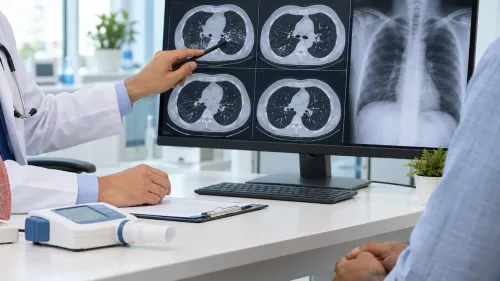
Testing usually starts with oxygen saturation, a respiratory examination, a chest radiograph and spirometry. These show how well you are oxygenating, whether your lungs sound narrowed or congested, whether the lungs look structurally abnormal and how forcefully you move air.
Spirometry with bronchodilator tests airflow before and after an inhaled reliever. A reliable asthma diagnosis needs evidence of variable expiratory airflow limitation; in adults, an increase in FEV1 or FVC of at least 12% and 200 mL supports asthma. One negative visit does not exclude asthma.
COPD diagnosis by spirometry requires post-bronchodilator obstruction, defined as an FEV1 FVC ratio below 0.70; symptoms or smoking history alone are insufficient.
| Test | What it helps show | When it is used |
|---|---|---|
| Peak-flow diary | Day-to-day airflow variation | Suspected variable asthma symptoms |
| Blood tests | Anaemia, inflammation or eosinophilic patterns | Breathlessness or suspected airway inflammation |
| Sputum testing | Infection or abnormal cells | Persistent, purulent or blood-streaked sputum |
| Allergy assessment | Relevant allergic triggers | Seasonal or exposure-linked symptoms |
| Cardiac tests | Heart-related breathlessness | Palpitations, leg swelling or breathlessness lying flat |
CT is selected for an abnormal X-ray, suspected interstitial disease, bronchiectasis, malignancy or unexplained symptoms after initial evaluation—not automatically for every cough. A normal X-ray does not exclude asthma, early airway disease, pulmonary embolism or some cancers.
Bronchoscopy is reserved for suspected obstruction, unexplained haemoptysis, a lesion needing tissue diagnosis or a foreign body. It is not a routine first test.
What care can follow the first chest assessment?
Results determine the next treatment; the same cough does not justify the same inhaler or antibiotic. A pulmonology consultation combines examination findings with respiratory investigations, symptom patterns and exposure history before choosing care.
1. Remove aggravating factors first: stop smoking and vaping, reduce dust or chemical exposure, and address a relevant occupational trigger.
2. Treat the identified cause. Options include inhaled medicines for asthma or COPD, nasal treatment for upper-airway disease, reflux treatment, and infection testing followed by antibiotics or other targeted treatment when results support infection.
3. Measure response rather than guessing. Follow-up peak-flow readings, spirometry, sputum review or pulmonary rehabilitation can show whether airflow, exercise tolerance and symptoms are improving.
4. Investigate findings that persist or remain unexplained with selected imaging, tissue sampling or multidisciplinary review. A CT scan, bronchoscopy or biopsy is chosen for a specific question, not ordered automatically for every cough.
Most cough, wheezing and breathlessness begin with medical respiratory care rather than surgery. A thoracic surgery referral becomes relevant for selected structural problems, including confirmed or strongly suspected operable lung cancer, certain pleural diseases, and persistent air leaks or pneumothoraces.
Galaxy Chest & Multi Specialty Hospital Pvt Ltd can provide a Trichy patient with this combined pathway through specialist consultation, respiratory investigations and medical or surgical chest care when findings justify it.
The decision should follow the examination and test results, not the name of a procedure or the fact that you searched for a chest hospital in Trichy.
Frequently asked questions
How long is a persistent cough, and when is it an emergency?
A cough under 3 weeks is acute, 3–8 weeks is subacute, and over 8 weeks is chronic. A cough lasting more than 3 weeks deserves attention. Seek emergency care for severe breathing difficulty, blue lips, confusion, coughing blood or chest pain.
What do the timing and triggers of wheezing, breathlessness and cough suggest?
Symptoms during exercise, at night, around dust or smoke, after meals, or during cold-air exposure can help identify possible causes. Record when symptoms begin, what triggers them and whether fever, sputum or chest tightness occurs.
When should you see a chest specialist instead of starting with a general physician?
See a chest specialist when symptoms persist, recur, worsen, disrupt sleep or activity, or remain unexplained after initial treatment. Specialist review is also appropriate with coughing blood, abnormal chest imaging or a history of smoking, tuberculosis or lung disease.
Which tests does a chest doctor use to find the cause?
The assessment can include oxygen saturation measurement, chest X-ray, spirometry, blood tests, sputum testing, CT scan, bronchoscopy or allergy testing. The doctor chooses tests based on your symptoms, examination and medical history.
What care can follow the first chest assessment?
Care may include inhalers, antibiotics when a bacterial infection is diagnosed, treatment for reflux or allergies, smoking cessation support, pulmonary rehabilitation, monitoring, or referral for procedures and surgery when scans reveal a structural problem.