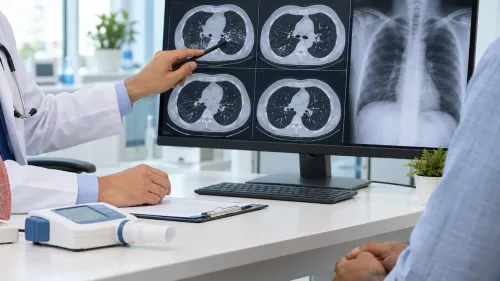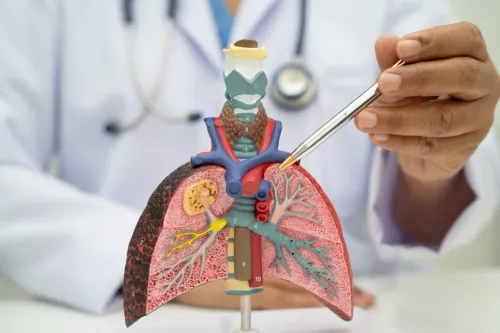
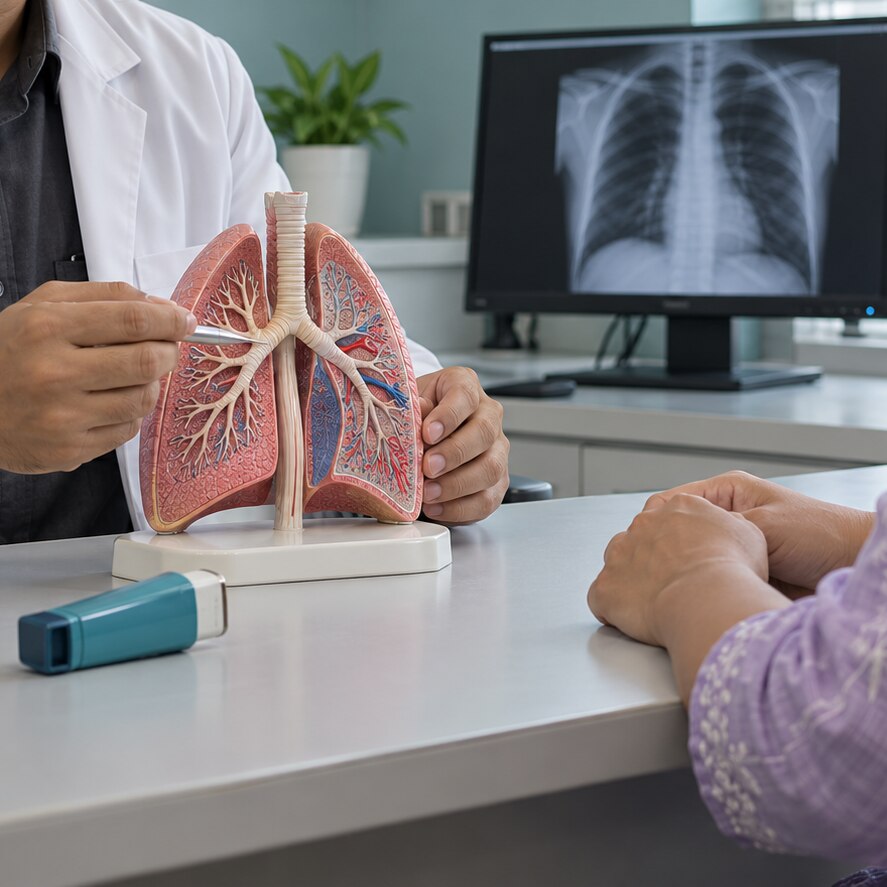
The right pulmonary doctor is not chosen by a “best” label alone. You need to match your symptoms and test needs to the right specialist, confirm that the diagnosis is evidence-based, and know when a clinic visit must give way to emergency care.
Key takeaways
- Match the doctor to your symptoms’ severity, pattern and likely cause.
- Ask how suspected asthma will be confirmed, including breathing tests.
- Seek urgent assessment for severe or rapidly worsening breathing trouble.
- Choose a wider specialist team when infection or airway disease is complex.
What makes a pulmonary doctor the right choice for your symptoms?
The right pulmonary doctor depends on the severity, pattern and likely cause of your breathing disorders—not on the word “lung” alone. A general physician suits a new, mild, stable cough or wheeze and can arrange initial tests.
Choose a pulmonologist when symptoms persist, asthma remains uncertain, spirometry is abnormal, oxygen is low, or breathlessness has no clear explanation.
| Option | Choose this clinician when | What they add |
|---|---|---|
| General physician | Symptoms are mild and newly started | Initial examination, medicines and basic testing |
| Pulmonologist | Asthma is difficult to control or diagnosis is unclear | Spirometry, bronchodilator testing, lung-function assessment and specialist treatment |
| Allergist | Symptoms follow pollen, dust, mould, pets or food, or allergic disease dominates | Allergy evaluation and trigger-focused treatment |
| Infectious-disease physician | Tuberculosis, unusual, resistant or recurrent infection is suspected | Microbiology-guided antimicrobial planning and infection control |
| Thoracic surgeon | A lung mass, pleural disease, airway lesion or resection is being considered | Surgical assessment; not routine asthma care |
| Emergency department | Breathing is rapidly worsening or severe | Immediate assessment and urgent respiratory care |
Go to the emergency department now for:
- Severe breathlessness at rest or inability to speak full sentences
- Blue or grey lips, confusion, fainting, or severe chest pain
- Coughing significant blood
- Low oxygen saturation with distress or rapidly worsening symptoms
For suspected asthma, ask whether the doctor will confirm variable airflow limitation with spirometry and bronchodilator testing, peak-flow variability or another objective test before escalating inhalers.
How should a good doctor assess suspected asthma?
Asthma diagnosis should not rest on cough, wheeze or breathlessness alone. These symptoms also occur with COPD, bronchiectasis, vocal-cord dysfunction, heart disease and anxiety-related breathing problems. The doctor should match your symptom pattern and triggers with objective evidence of variable airflow limitation.
1. Take a detailed history, including night symptoms, exercise or allergy triggers, previous attacks, smoking, workplace exposures and current medicines. Record oxygen level and examine your chest.
2. Perform spirometry with bronchodilator testing when possible. Improvement after a reliever supports asthma, but poor effort, recent inhaler use or technically inadequate testing can distort the result.
3. Review peak-flow readings taken twice daily for about two weeks, including good and bad symptom days. Meaningful variation supports asthma when spirometry is inconclusive.
4. Use FeNO testing as supporting evidence of type-2 airway inflammation, not as a stand-alone diagnosis. A low result does not rule out every form of asthma.
5. If results are normal between attacks but suspicion remains, repeat testing during symptoms or consider bronchial challenge testing. The doctor should account for inhaled corticosteroid treatment before interpreting results.
Before increasing inhalers, check adherence, inhaler technique, ongoing exposures, rhinitis or reflux, and whether another condition explains the symptoms. Inhaled corticosteroid-containing treatment targets airway inflammation; relying only on a short-acting bronchodilator can leave that risk untreated.
What happens during a consultation for a lung infection?
During a consultation, the doctor separates causes by combining symptom duration, exposure history, examination, oxygen level, chest imaging and targeted tests. Pneumonia testing may include a chest X-ray, blood tests and, for severe illness or treatment failure, a lower-airway sample rather than saliva.
| Cause | Clues the doctor looks for | Tests or next step |
|---|---|---|
| Pneumonia | Sudden fever, productive cough, breathlessness and a new infiltrate | Chest X-ray; sputum culture when illness is severe, recurrent or not improving |
| Tuberculosis | Cough lasting weeks, night sweats, weight loss, coughing blood or compatible imaging | Tuberculosis testing with rapid molecular testing and culture; one negative result may not end evaluation |
| Viral infection | Cold symptoms, wheezing or diffuse symptoms without a bacterial pattern | Viral swab when the result changes isolation or treatment; antibiotics do not treat viruses |
| Aspiration | Cough after swallowing, vomiting, reflux, sedation or a swallowing problem | Swallowing assessment and imaging focused on the affected lung region |
| Bronchiectasis | Repeated infections and daily mucus production | High-resolution CT and sputum culture from a good-quality sample |
| Obstruction or another cause | Pneumonia repeatedly affecting the same area, persistent fever or unexplained imaging changes | CT, bronchoscopy or specialist assessment for a blockage, malignancy or another lung disorder |
A saliva-contaminated sample can mislead treatment, so ask how the specimen was collected. CT is not automatic for every cough; the doctor should explain whether it is needed and whether contrast adds useful information. Persistent or recurrent infection warrants investigation rather than repeated antibiotics alone.
How can you compare pulmonary doctors before booking?
Compare doctors by asking what they will check, teach, and do if the first treatment fails—not by choosing the first result for “best pulmonary doctor in Trichy.” A thorough consultation links symptoms to testing and explains why each test is needed.
Ask these questions before booking:
- “How will you confirm asthma?” Look for discussion of spirometry with bronchodilator testing, test quality, treatment effects, and repeat or additional testing if results are normal between episodes.
- “Will you check adherence, triggers, other conditions, and inhaler technique before increasing medication?” The doctor should demonstrate the device, watch you repeat it, and correct errors.
- “Will I leave with a written asthma action plan?” It should state daily treatment, worsening symptoms, reliever use, and when to seek urgent help.
- “When would you order a sputum culture or chest CT?” A good answer connects sputum testing to severe pneumonia, treatment failure, recurrent infection, bronchiectasis, or tuberculosis concern, and explains why CT or contrast is necessary.
- “How soon will you review me, and who handles severe asthma care or worsening symptoms?” Ask whether pulmonary-function testing, imaging, emergency support, thoracic surgery, or infectious-disease input is available.
| Compare | Strong sign | Warning sign |
|---|---|---|
| Asthma care | Technique review, inhaled corticosteroid-containing treatment, written plan | Short-acting reliever alone with no review |
| Infection care | Sample quality and culture purpose explained | Saliva treated as a reliable sputum sample |
| Wider care | Clear referral and follow-up pathway | No plan if symptoms or tests do not fit |
Galaxy Chest & Multi Specialty Hospital Pvt Ltd is worth assessing on this practical point: whether bronchoscopy or airway intervention is offered only when testing identifies a reason, rather than as a default for cough.
Related service
Investigation Pulmonary Function Test(spirometry) to know the function of lung View service → |
When does breathing trouble require a wider specialist team?
Expand care beyond routine pulmonary treatment when the diagnosis remains uncertain, symptoms are disproportionate, or the problem may involve damaged lung tissue, blocked airways, cancer, or respiratory failure. A pulmonologist can coordinate testing with a radiologist, infectious-disease physician, intensivist, oncologist, allergist, or thoracic surgeon. A thoracic surgeon is not a substitute for routine asthma management.
- Request a pulmonary function test when breathlessness persists, asthma is unconfirmed, or basic spirometry does not explain the limitation. Lung volumes, diffusion capacity, repeat testing during symptoms, peak-flow monitoring, or bronchial challenge testing may be needed.
- Discuss a chest CT when a chest X-ray is unclear or doctors suspect bronchiectasis, interstitial lung disease, emphysema, a nodule, pulmonary embolism, or a complication. Ask why CT is needed and whether contrast applies; unnecessary scans expose you to radiation and incidental findings.
- Arrange critical-care access for worsening oxygen levels, severe work of breathing, confusion, inability to speak, blue lips, or exhaustion. These signs need emergency assessment, not an outpatient referral.
- Include infection expertise for prolonged cough with fever, night sweats, weight loss, coughing blood, or compatible imaging. Tuberculosis evaluation may require rapid molecular testing and culture even after an initial negative result.
- Add airway and cancer evaluation for a persistent lung shadow, coughing blood, unexplained weight loss, a growing nodule, airway narrowing, or a suspected foreign body. The team may include a radiologist, oncologist, interventional pulmonologist, and thoracic surgeon.
Low-dose CT screening applies only to defined high-risk groups. Symptoms require diagnostic evaluation, and an incidental nodule is neither automatic proof of cancer nor a reason to ignore follow-up.
Frequently asked questions
What makes a pulmonary doctor the right choice for breathing symptoms?
Choose based on the severity, pattern and likely cause of your symptoms. A general physician can assess a new, mild, stable cough or wheeze and arrange initial tests; persistent, severe or complex symptoms warrant pulmonary review.
How should a doctor assess suspected asthma?
The assessment should connect your symptom pattern with an examination and appropriate breathing tests. Ask how the doctor will confirm asthma and distinguish it from other causes of wheezing, cough or breathlessness.
What happens during a consultation for a lung infection?
The doctor reviews your symptoms, duration, fever, exposure history and breathing difficulty, examines your chest and decides whether investigations or treatment are needed. Tell them if symptoms are worsening or breathing has become difficult.
How can you compare pulmonary doctors before booking?
Compare their experience with your specific symptoms, access to respiratory investigations, approach to explaining results and ability to coordinate care when the condition is complex.
When does breathing trouble require a wider specialist team?
A wider team helps when symptoms are severe, persistent, recurrent or linked to complex infection, airway disease, lung damage or another condition requiring coordinated specialist care.