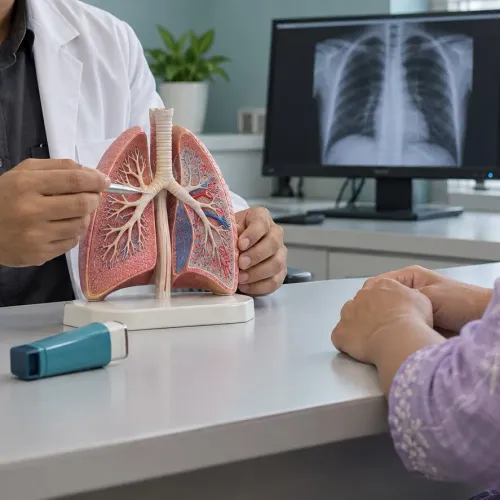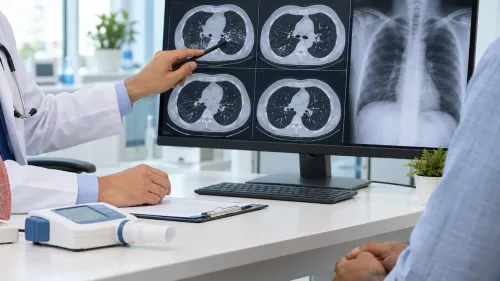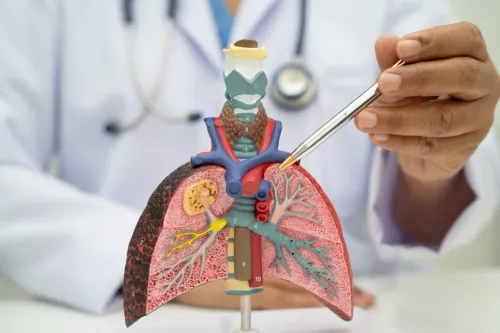

A cough that lingers, phlegm that keeps returning, or breathlessness during ordinary activity can come from several different problems, and the right next step depends on duration, severity and accompanying signs. You will learn how to classify these symptoms, recognise urgent warning signs, prepare for evaluation and understand what a chest physician is trying to diagnose.
Key takeaways
- Seek urgent care for severe breathlessness, blue lips, confusion or chest pain.
- Tell the physician how long your cough has lasted and what triggers it.
- Avoid smoking before spirometry and follow the clinic’s medication instructions.
- Book a chest-physician visit when symptoms persist, recur or limit daily activity.
What do chronic cough, chest congestion and breathing difficulty mean?
A cough is a forceful airway-clearing reflex; chest congestion is a sensation of mucus, heaviness or blockage in the chest; breathing difficulty means you cannot move air comfortably or get enough breath. They can occur together, but one does not automatically explain the others.
| Symptom | Time or defining feature | Conditions it can indicate |
|---|---|---|
| Acute cough under 3 weeks | Often follows a cold or sudden irritant exposure | Viral infection, allergies, asthma flare, pneumonia or inhaled irritants |
| Subacute cough | Lasts 3 to 8 weeks | Post-viral airway irritation, asthma, sinus-related drainage or persistent infection |
| Chronic cough | Lasts more than 8 weeks in adults | Asthma or cough-variant asthma, reflux, upper-airway cough syndrome, ACE-inhibitor medicines, COPD, bronchiectasis or less commonly lung cancer |
| Chest congestion | Mucus, rattling, tightness or a “full” chest | Bronchitis, pneumonia, asthma, COPD, bronchiectasis or fluid from heart failure; the sensation alone does not prove infection |
| Breathing difficulty | Shortness of breath, rapid breathing or inability to take a full breath | Asthma, COPD, pneumonia, anaemia, heart disease, pulmonary embolism or anxiety |
A chronic cough can remain dry or produce sputum. Daily sputum, repeated chest infections or blood-streaked phlegm raises concern for bronchiectasis, while wheezing points toward narrowed airways. A normal chest X-ray does not exclude asthma, reflux-related cough or upper-airway cough syndrome, so symptoms still need targeted assessment.
When do cough and breathlessness need urgent medical care?
Call emergency services now for sudden or rapidly worsening breathlessness, severe breathlessness at rest, blue lips, confusion, fainting, chest pain, or an inability to speak in full sentences. Coughing blood more than a few streaks is also an emergency, especially with breathlessness, dizziness or chest pain.
- Emergency care: Sit upright, avoid driving yourself, and use a prescribed reliever inhaler only as directed while waiting. A pulse-oximeter reading below 90% needs immediate attention; do not delay for a repeat reading if you look blue, feel faint or are struggling to breathe.
- Same-day assessment: Arrange urgent medical review for new or worsening breathlessness, a fever that persists, rapidly increasing sputum, new wheezing, repeated blood-streaked phlegm, or oxygen saturation below your usual reading. Seek same-day care for unexplained weight loss or persistent fever, even when breathing feels manageable.
- Routine chest-physician appointment: Book a specialist review when a cough lasts more than 8 weeks, or when cough, daily sputum and congestion keep returning without an acute deterioration. Bring your medication list, smoking or occupational exposure history, prior chest X-rays and any oxygen readings.
A normal X-ray does not exclude asthma, reflux-related cough or airway disease, so persistent symptoms still need assessment.
What will a chest physician ask and test first?
The first assessment looks for a cause, not an infection label. For an adult cough lasting more than eight weeks, the chest physician will ask when it began, whether it is dry or productive, what triggers it, and whether breathlessness occurs at rest, during activity or at night.
Expect questions and checks about:
- Sputum colour and quantity, including daily production, foul smell or blood
- Fever, night sweats, weight loss, wheezing, heartburn, nasal symptoms and choking episodes
- Smoking history, vaping and second-hand smoke
- Occupational exposure to dust, chemicals, fumes, asbestos or other lung irritants
- Tuberculosis exposure, previous tuberculosis and contact with someone who had a persistent cough
- Medicines, especially ACE inhibitors such as enalapril or ramipril, and previous antibiotic courses
- Oxygen saturation, temperature, pulse, breathing rate and blood pressure
- Chest sounds, breathing effort, nasal passages, throat and signs of heart or leg problems
A chest X-ray and spirometry are standard first-line investigations. The X-ray can reveal pneumonia, tuberculosis, a mass or other structural change; spirometry assesses airflow obstruction seen in conditions such as asthma or COPD.
Yellow or green sputum alone does not prove bacterial infection, so repeated antibiotics without an identified cause can cause side effects and delay the correct diagnosis.
A thin-section chest CT is reserved for selected cases, including unexplained cough after initial tests, suspected bronchiectasis, interstitial lung disease or malignancy. Persistent daily sputum, repeated chest infections or coughing blood raises concern for bronchiectasis; sputum culture guides treatment during an infective flare.
How should you prepare for spirometry, and what can it show?
Prepare for spirometry by wearing loose clothing, avoiding a heavy meal beforehand, and not smoking immediately before the appointment. Ask the clinician whether to withhold inhalers; stopping a bronchodilator without instructions can worsen symptoms and distort the test.
1. You will sit upright, wear a nose clip, seal your lips around a mouthpiece, inhale fully, then blow out as hard and long as possible. The manoeuvre is repeated several times, because a weak or early-stopped blow can produce a misleading result.
2. The machine measures FEV1, the air expelled in the first second, and FVC, the total forced exhaled volume. A persistently low ratio supports airflow obstruction; for suspected COPD, post-bronchodilator FEV1/FVC below 0.70 is the traditional diagnostic threshold.
3. During spirometry with bronchodilator testing, you inhale medicine through an inhaler or nebuliser and repeat the measurements after the medicine has taken effect, often after 10–15 minutes. Improvement supports reversible airway narrowing, which helps assess asthma, but the result must match your symptoms and history.
4. Spirometry cannot identify every cause of cough or chest congestion. Normal results on one day do not exclude asthma or cough-variant asthma, whose obstruction can vary. Repeat testing or challenge tests may be needed.
A normal test also does not diagnose or rule out reflux, upper-airway cough syndrome, infection, bronchiectasis or lung cancer; chest imaging, sputum tests or other investigations may be required.
When is a chest-physician appointment the right next step?
Book a routine chest-physician appointment when a cough lasts more than eight weeks, keeps returning, or comes with daily sputum, wheezing or exertional breathlessness. Repeated chest infections, blood-streaked sputum, unexplained weight loss or symptoms that persist despite a normal chest X-ray also justify specialist review.
A normal X-ray does not exclude asthma, cough-variant asthma, non-asthmatic eosinophilic airway disease, upper-airway cough syndrome or gastroesophageal reflux. Your doctor may choose follow-up based on the suspected cause rather than ordering every test at once:
1. Review medicines, especially ACE inhibitors. ACE-inhibitor cough is often dry and can begin months after treatment starts; your clinician may replace the drug with another class instead of continuing cough syrup.
2. Check breathing with post-bronchodilator spirometry when COPD is suspected. Chronic cough, sputum and breathlessness alone do not establish COPD; persistent airflow limitation must be demonstrated.
3. Arrange sputum culture during a suspected bronchiectasis flare. Persistent daily sputum, recurrent infections or recurrent haemoptysis may prompt a thin-section CT, which is more useful than routine CT screening for confirming bronchiectasis.
4. Consider targeted trials or testing for reflux and upper-airway causes when lung tests do not explain the cough.
Do not start leftover antibiotics or repeat antibiotic courses without an identified infection. Unnecessary treatment can cause side effects and resistance while delaying the correct diagnosis. At Galaxy Chest & Multi Specialty Hospital Pvt Ltd, a specialist can decide whether unexplained findings warrant advanced airway or tissue assessment rather than another empirical prescription.
Frequently asked questions
What do chronic cough, chest congestion and breathing difficulty mean?
A chronic cough persists over an extended period; chest congestion describes mucus, heaviness or blockage; breathing difficulty means moving air feels uncomfortable or insufficient. These symptoms can occur together without having the same cause.
When do cough and breathlessness need urgent medical care?
Seek urgent medical care for severe or rapidly worsening breathlessness, blue lips, confusion, chest pain or difficulty speaking because of breathlessness.
What will a chest physician ask and test first?
The physician will ask about symptom duration, triggers, sputum, smoking, allergies, medicines and previous lung disease, then choose tests based on your examination and history.
How should you prepare for spirometry, and what can it show?
Follow the clinic’s instructions about inhalers, avoid smoking beforehand and wear comfortable clothing. Spirometry measures how much air you exhale and how quickly, helping assess airflow obstruction.
When is a chest-physician appointment the right next step?
Arrange an appointment when cough, congestion or breathing difficulty persists, returns repeatedly or limits sleep, work, exercise or daily activities.