The right lung doctor depends on whether you have an infection, variable breathing symptoms, a chronic condition, a sleep-related problem or an emergency. You will be able to judge urgency, compare specialists and diagnostic services, prepare for a consultation, and build a safer long-term care plan without choosing a doctor by the word “best” alone.
Key takeaways
- Seek emergency care for severe breathlessness, blue lips, confusion, or coughing large amounts of blood.
- Bring your symptom timeline, medication list, prior scans, and smoking or exposure history.
- Persistent cough, fever, weight loss, or night sweats needs medical assessment for infection or TB.
- Compare test explanations, infection control, specialist expertise, follow-up, and total costs before agreeing.
Which lung doctor should you see, and when is breathing trouble an emergency?
Choose a pulmonologist for pneumonia, tuberculosis, asthma, COPD, bronchitis, bronchiectasis, interstitial lung disease, pleural disease, lung nodules, coughing blood or unexplained breathlessness. This pulmonary and critical-care physician investigates and medically treats respiratory disease; a general physician can assess straightforward illness and refer when symptoms persist or tests are abnormal.
The best lung doctor is not a generic label: check verified qualifications, experience with your condition, clear explanations and reliable follow-up. For “breathing problems specialist Trichy” or “lung infection doctor,” apply the same checks.
| Professional | Main role | When to involve them |
|---|---|---|
| Pulmonologist | Lung, airway and breathing assessment | First visit for persistent, recurrent or complex symptoms |
| General physician | Broad medical assessment | Mild, uncomplicated illness or initial referral |
| Thoracic surgeon | Operations on lung, pleura, airway or chest | Nodules, airway blockage or disease needing surgery; often joint care |
| Infectious-disease specialist | Complex or drug-resistant infections | Difficult tuberculosis or severe infection alongside pulmonology |
| Allergist | Allergy and immune-triggered disease | Suspected allergic asthma or severe environmental triggers |
| Sleep physician | Sleep-related breathing disorders | Snoring, witnessed pauses or daytime sleepiness |
Skip routine booking and go to the nearest emergency department for severe breathlessness at rest, blue or grey lips, confusion, fainting, severe chest pain, inability to speak full sentences, significant haemoptysis, low oxygen readings with symptoms, or rapidly worsening illness. Do not wait for your preferred specialist appointment.
What happens at the first consultation and which tests may be needed?
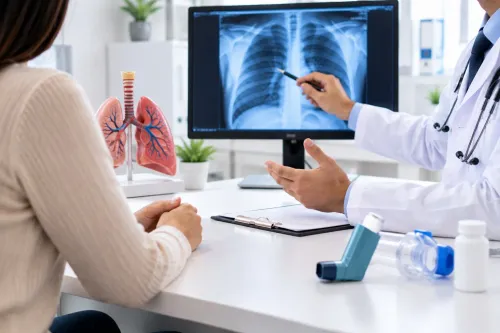
Bring medication packets, a current medicine list, allergy details, discharge papers, previous chest X-rays, CT reports and scan discs to your first pulmonology consultation. Record when symptoms began, their triggers, and exposure to smoking, vaping, biomass smoke, workplace dust or fumes, mould and second-hand smoke.
- Expect pulse oximetry, respiratory-rate measurement, chest examination and medication review.
- Tests may include blood work, sputum microscopy and culture, molecular tuberculosis testing, allergy assessment or a sleep study.
- Ask, “What will a positive or negative result change?” and “Is there a non-invasive alternative?”
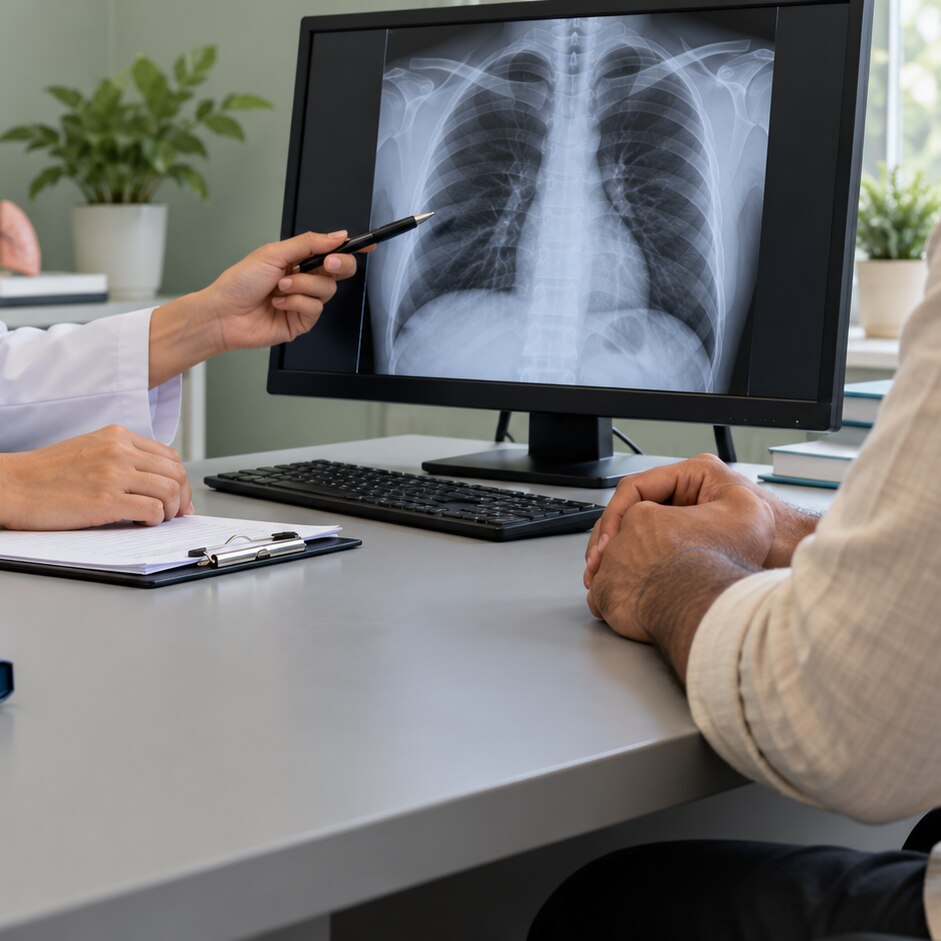
Chest X-ray versus CT scan is a common decision:
| Option | What it shows | Trade-off |
|---|---|---|
| Chest X-ray | Broad view of pneumonia, fluid, collapse or large abnormalities | Less detail and lower radiation |
| CT scan | Detailed view of nodules, airways, interstitial disease, clots or complications | More radiation and sometimes contrast-related risks |
Spirometry bronchodilator test measures airflow before and after an inhaled reliever; it helps confirm persistent obstruction when interpreted with symptoms and exposure history. Peak flow alone cannot diagnose every lung disease. Blood tests can suggest infection, anaemia or inflammation, while sputum testing can identify organisms, including tuberculosis.
Cough and breathlessness can reflect infection, asthma, COPD, reflux, post-nasal drip, heart disease, pulmonary embolism or anaemia. Symptoms alone cannot select treatment, so ask what each test rules in, rules out or changes.
How should you respond to pneumonia, tuberculosis and a cough that will not settle?
Pneumonia symptoms need urgent reassessment when you develop persistent fever, worsening breathlessness, low oxygen saturation with symptoms, confusion, inability to drink, or rapid deterioration. Do not wait for a routine appointment if you are struggling to breathe, becoming drowsy, or worsening quickly; seek emergency care.
Pneumonia treatment depends on severity, likely organism, other illnesses, chest-imaging findings and local antibiotic-resistance patterns. Antibiotics do not treat viral respiratory infections. Do not self-start antibiotics, stop early or change the dose; follow the prescription and contact the treating clinician if fever, breathlessness or weakness is not improving.
A sputum culture matters when you produce sputum, appear seriously ill, fail initial treatment or have risk factors for resistant infection.
A persistent cough lasting more than three weeks deserves medical review. Cough with fever, night sweats, weight loss, close contact with tuberculosis, or blood-streaked sputum can prompt tuberculosis testing, particularly where TB is prevalent. Clinicians may combine molecular testing, smear microscopy, culture and chest imaging because one test does not answer every diagnostic question.
If tuberculosis is suspected or confirmed, follow the treating clinician’s current isolation instructions and name the exact diagnosis and test involved; public-health rules change. Treatment uses multiple medicines for months under an appropriate TB programme. Most evaluations begin with history, examination and targeted tests. Bronchoscopy or hospital admission is not automatic.
How do you compare a lung-care service before agreeing to a test or procedure?
Compare the service by asking whether it can manage the next step if routine tests do not explain your symptoms. A practical checklist for choosing a pulmonologist includes:
- Appointment access and a 24-hour emergency department
- In-house X-ray, CT, laboratory testing and infection-control procedures
- Spirometry, bronchodilator testing and full pulmonary-function testing
- Bronchoscopy, sleep testing, ICU care and non-invasive or invasive ventilation
- Written follow-up plans and transparent referrals
| Service to verify | Why it matters |
|---|---|
| Imaging and laboratory support | Results are available quickly and can be correlated with examination findings |
| Pulmonary and sleep testing | Asthma, COPD, restrictive disease and sleep apnoea require different measurements |
| Escalation pathway | A thoracic surgeon, oncology team or infectious-disease specialist can join care without repeating every assessment |
Bronchoscopy is a selected procedure for airway inspection, specimen collection or treatment—not a routine cough test. Ask for written preparation instructions, whether sedation is planned, when to stop food or medicines, how throat discomfort will be managed, and when results will arrive. Discuss bronchoscopy risks, including bleeding, bronchospasm, infection and pneumothorax.
Rigid bronchoscopy or endobronchial polypectomy may suit a specific airway obstruction; imaging, biopsy findings and the obstruction’s location determine whether removal, stenting, observation or another treatment is safer.
Tracheostomy, bullectomy, wedge resection and other operations are not first-line treatment for ordinary cough, uncomplicated pneumonia or asthma. Ask the thoracic surgeon about candidacy, anaesthesia, admission, recovery, risks, non-surgical alternatives and follow-up.
In Trichy, Galaxy Chest & Multi Specialty Hospital Pvt Ltd is one lung hospital Trichy patients can contact, after verifying these services for their case.
Related products
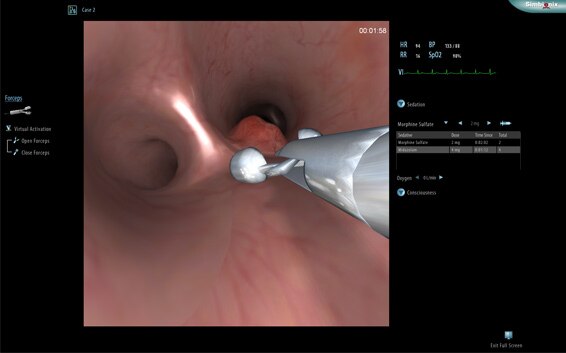 | Bronchoscopy We are the best in treating Bronchoscopy procedure in Trichy. Bronchoscopy is an instrument, by which we can visualise the lumen of airways. |
 | Tracheostomy We are the best in treating Tracheostomy in Trichy. It is the procedure by which a hole was made in the trachea (airway) to promote the clearence of... |
What does safe long-term lung care look like after diagnosis?
Safe long-term lung care starts with using treatment correctly between appointments, not simply collecting prescriptions. Ask a clinician to observe your inhaler technique, check controller adherence, and confirm that the device suits your strength, coordination and understanding. Use a spacer when prescribed, creating a reliable mouthpiece seal and matching each dose to the device’s timing.
1. Keep a written monitoring plan. Record symptoms, triggers, nighttime waking, rescue-inhaler use and treatment questions. Record peak-flow readings only when your clinician specifically advises it. Keep an exacerbation action plan showing what to do and when worsening symptoms require an appointment, urgent review or emergency care.
2. Do not keep increasing a reliever because symptoms are worsening. Asthma, COPD, bronchiectasis and interstitial lung disease need scheduled review, with smoking cessation, vaping and smoke-exposure reduction, clinician-guided vaccination discussion, pulmonary rehabilitation, individualized exercise, nutrition and sleep support.
3. Treat home oxygen readings as clues, not diagnoses. Cold fingers, poor circulation, nail products and inaccurate devices can mislead a pulse oximeter, so it cannot replace clinical assessment. Use oxygen only when prescribed, and never borrow it or adjust the flow independently.
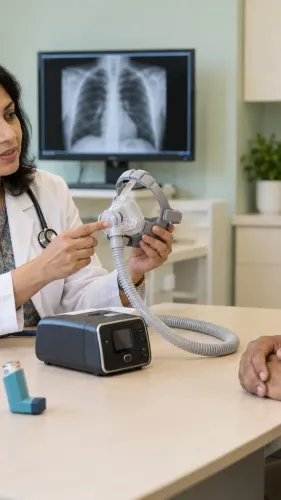
Snoring, witnessed breathing pauses, morning headaches and daytime sleepiness are sleep study symptoms that warrant sleep assessment. A sleep study does not always require admission and cannot answer every breathing question; untreated sleep apnoea also creates driving and work-safety risks.
Online information cannot diagnose you. Do not change prescribed medicines, steroids, inhalers, antibiotics or oxygen without the treating clinician.
Frequently asked questions
Which lung doctor should you see, and when is breathing trouble an emergency?
See a pulmonologist for persistent or complex lung symptoms. Seek emergency care for severe breathlessness, blue lips, confusion, chest pain, fainting, or heavy coughing of blood.
What happens at the first lung consultation?
The doctor reviews your symptoms, medical history, medicines, smoking and exposure history, examines your chest, and orders tests such as chest X-ray, spirometry, blood tests, CT, or sputum testing when indicated.
How should you respond to pneumonia, tuberculosis, or a cough that will not settle?
Follow the prescribed treatment, complete antibiotics or tuberculosis medicines exactly as directed, and return for review when symptoms persist, worsen, or include weight loss, night sweats, fever, or coughing blood.
How do you compare a lung-care service before agreeing to a test or procedure?
Ask why the test or procedure is needed, what alternatives exist, who will perform it, how results are reported, what complications can occur, and what the full cost includes.
What does safe long-term lung care look like after diagnosis?
Keep scheduled reviews, take medicines correctly, use inhalers with checked technique, follow vaccination and rehabilitation advice, avoid smoke exposure, and report worsening breathing early.
Related items
State Of Art Theatre Infrastructure Dedicated Lung Surgery Theatre we can handle any kind of lung Surgeries View service → |
 | We are the best in treating Rigid Bronchoscopy in Trichy. Mainly useful in removal of foreign bodies from the lumen of airway. View product → |
 | Bullectomy Bullectomy is the surgical removal of a bulla, which is a dilated air space in the lung parenchyma measuring more than 1 cm. |
 | We are the best treating in Sleep Study in Trichy. It will be useful to find out the cause for sleep disorder like obstructive sleep apnoea. View product → |