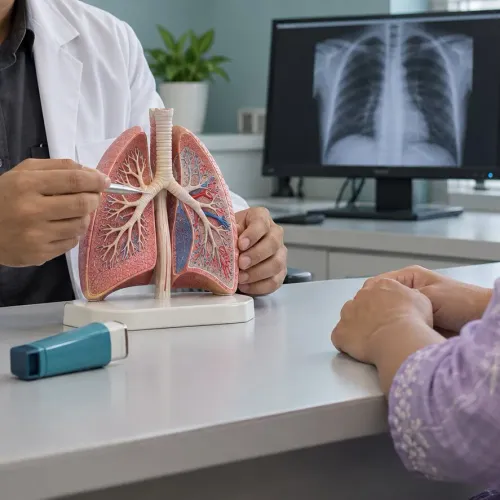

A child who wheezes, coughs at night or struggles to keep up during play needs the right explanation, not an automatic asthma label. You will learn which symptoms need emergency care, when to book a specialist visit, what testing can show, and how to judge whether treatment is working.
Key takeaways
- Recurring night symptoms or activity limits warrant specialist assessment.
- Wheezing alone does not confirm asthma; infections, allergies and airway problems can mimic it.
- Breathing tests help compare airflow before and after a bronchodilator.
- Good asthma control means normal activity, restful sleep and minimal rescue inhaler use.
When a child’s breathing problem needs a pediatric pulmonologist
A child needs a pediatric pulmonologist when breathing symptoms recur, disrupt sleep or activity, or do not fit a straightforward infection. Childhood asthma requires variable symptoms plus evidence of variable airflow limitation; wheeze alone does not prove it.
- Recurrent wheezing, especially between viral infections, after exercise or at night
- Chronic cough, including a cough that persists after an infection or repeatedly wakes the child
- Noisy breathing, harsh inspiratory stridor, breathing difficulty or symptoms that fail to improve as expected with prescribed treatment
- Recurrent pneumonia, frequent emergency visits, repeated steroid courses, missed school or poor exercise tolerance
- Persistent wet cough, poor growth, clubbing, focal chest findings, or symptoms that began after choking; these need assessment for conditions such as aspiration, bronchiectasis or airway abnormalities
| Situation | Action | Why it matters |
|---|---|---|
| Repeated night cough, exercise symptoms or wheezing between infections | Book a specialist appointment | The pattern needs assessment for asthma and other causes |
| Blue or grey lips, severe chest indrawing, pauses in breathing or inability to speak or drink | Seek emergency care now | These signs indicate dangerous breathing failure |
| Drowsiness, confusion, exhaustion or a quiet chest during an attack | Seek emergency care now | Less wheeze can mean very little air is moving |
| No improvement after the prescribed reliever inhaler | Seek emergency care now | Severe airway obstruction may be continuing |
Do not wait for a routine appointment during a severe episode. Follow the child’s written action plan and contact emergency services when it directs you to do so.
Asthma is not the only cause of wheezing
Wheeze alone does not diagnose asthma. Asthma produces variable wheeze, cough, breathlessness or chest tightness, with evidence of changing expiratory airflow; symptoms often recur with exercise, allergens, night-time or infections. A normal examination between episodes does not rule it out.
| Condition | Clues that point away from asthma | What clinicians look for |
|---|---|---|
| Viral wheezing | Wheeze appears only during colds and disappears completely between infections | Age, symptom-free intervals and response to treatment |
| Bronchiolitis | Usually affects infants, with a first viral episode, rapid breathing, crackles, feeding difficulty and chest recession | Oxygen level, hydration and work of breathing |
| Croup | Barking cough, hoarse voice and harsh inspiratory stridor, rather than a musical sound during breathing out | Upper-airway noise and throat symptoms |
| Pneumonia in children | Fever, fast breathing, reduced activity, chest pain, crackles or a focal examination finding | Oxygen level, respiratory rate and, when needed, chest imaging |
| Foreign-body aspiration | Sudden coughing or choking, persistent one-sided wheeze or unequal breath sounds | The event history and asymmetric examination; bronchoscopy may be needed |
| Anxiety-related breathlessness | Tingling, rapid breathing or chest tightness during distress, without objective wheeze or airflow change | Oxygen level, examination and testing before assigning this explanation |
A wet cough lasting weeks, recurrent pneumonia, poor growth or symptoms beginning after choking needs assessment for infection, bronchiectasis, airway compression or congenital disease. Do not label persistent breathlessness as anxiety until physical causes have been checked.
What happens during the consultation and breathing tests
The consultation starts with a detailed symptom history: when wheeze, cough or breathlessness occurs, whether it follows infections, exercise or allergens, and whether symptoms wake the child at night. The clinician also asks about eczema, allergies, family asthma, tobacco exposure, medicines, missed school and previous emergency visits.
Examination includes breathing rate, oxygen saturation, chest movement, work of breathing, air entry, wheeze, growth and the nose and throat. A normal examination between episodes does not exclude asthma, so pediatric asthma diagnosis combines the symptom pattern with evidence of variable airflow limitation.
Useful investigations include:
- Spirometry in children: Usually practical from age 5 or 6 when coaching produces repeated acceptable blows; it measures obstruction and is the main objective test for cooperative children.
- Bronchodilator response testing: Spirometry is repeated after a reliever medicine. Improvement supports asthma, but a negative result does not exclude it when symptoms are absent or treatment is active.
- Peak-flow monitoring: A home diary helps older, cooperative children show day-to-day variation when symptoms are intermittent or spirometry is inconclusive.
- Chest imaging: An X-ray is reserved for focal signs, recurrent pneumonia, persistent symptoms or suspected foreign-body aspiration, not routine uncomplicated asthma.
- Sleep studies: Arrange them for snoring, pauses in breathing, restless sleep or suspected sleep-related breathing disorders.
- Bronchoscopy: Consider it for sudden persistent symptoms after choking, one-sided findings, airway obstruction or unexplained recurrent pneumonia.
Interpret every result alongside the child’s history and response to treatment.
Medicines, inhalers and the signs of good asthma control
Use the prescribed quick-relief medicine for sudden wheeze, cough or chest tightness exactly as the action plan states. Do not keep repeating doses without advice if relief is brief, symptoms return quickly or breathing worsens.
Daily preventer medicine, often an inhaled corticosteroid, reduces airway inflammation; give it consistently, even when the child feels well, and do not stop it without review.
An inhaler with spacer delivers medicine effectively when the child uses it correctly. Shake the inhaler, fit it to the spacer, create a firm mouth or mask seal, give one puff at a time and let the child take several relaxed breaths. Ask a clinician to watch the technique before increasing the dose.
A nebuliser for children is not automatically stronger than a spacer. Device choice depends on the attack’s severity, the child’s cooperation, oxygen needs and local protocol; use a nebuliser only as instructed.
The written asthma plan should state:
- The daily controller and its dose
- Early worsening signs, including falling peak flow when monitoring is appropriate
- Exactly when to use extra reliever treatment
- When to seek urgent or emergency care
The plan is working when the child sleeps, plays and exercises normally, misses little school, needs quick-relief medicine infrequently and has no repeated attacks. Contact the clinician for night symptoms, activity limits, frequent reliever use or steroid courses.
Seek emergency care for blue or grey lips, severe chest indrawing, exhaustion, confusion, inability to speak or drink, or poor response to the reliever.
Choosing specialist care and preparing for follow-up
Compare the clinician’s child-specific experience, diagnostic access and follow-up system before booking a pediatric pulmonology consultation.
| Compare | Ask | Why it matters |
|---|---|---|
| Clinician | How often do you assess asthma, recurrent wheeze, chronic cough and exercise symptoms? | Experience helps prevent premature medication escalation or a missed diagnosis. |
| Testing | Are spirometry, allergy assessment, sleep studies or bronchoscopy arranged when indicated? | Your child may otherwise need separate referrals and travel. |
| Follow-up | Who reviews results, and how quickly can you obtain advice during worsening symptoms? | A test without a clear review plan creates delay. |
Bring these items:
- A symptom timeline, including night cough, exercise triggers, infections, school absence and emergency visits.
- Every inhaler, spacer, mask and nebuliser, plus medicine names, doses and refill history.
- Previous prescriptions, chest X-rays, spirometry reports, allergy results and discharge papers.
- Videos of noisy breathing or coughing episodes, if recording was safe.
- Your questions about an asthma action plan and inhaler technique teaching.
Confirm the test duration, preparation, fees, report turnaround, sedation requirements, fasting rules and whether a parent can stay with the child. Ask who handles an abnormal result and whether urgent review is available after a procedure.
Galaxy Chest & Multi Specialty Hospital Pvt Ltd is one Trichy option to question about these practical details when comparing pediatric respiratory care in Trichy.
Related products
 | We are the best treating in Sleep Study in Trichy. It will be useful to find out the cause for sleep disorder like obstructive sleep apnoea. View product → |
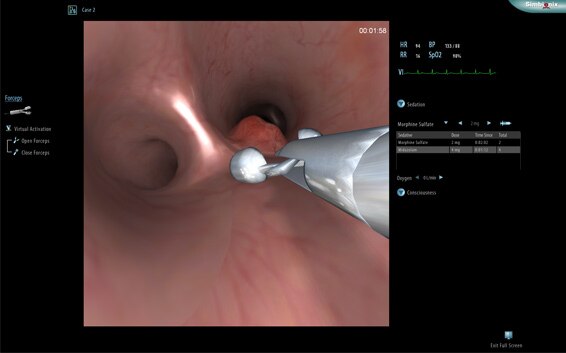 | Bronchoscopy We are the best in treating Bronchoscopy procedure in Trichy. Bronchoscopy is an instrument, by which we can visualise the lumen of airways. |
Frequently asked questions
When does a child need a pediatric pulmonologist?
Arrange a specialist evaluation when breathing symptoms recur, disturb sleep or activity, require repeated urgent care, or do not follow a straightforward infection.
Does wheezing always mean asthma?
No. Wheezing can result from viral infections, allergies, foreign-body aspiration, structural airway problems and other lung conditions. Asthma requires variable symptoms plus evidence of variable airflow limitation.
What happens during a pediatric pulmonology consultation?
The clinician reviews symptom patterns, triggers, sleep, exercise tolerance, family history and previous treatments, examines the child and selects age-appropriate breathing tests.
How do breathing tests help diagnose childhood asthma?
Spirometry measures airflow before and after a bronchodilator. A meaningful improvement supports variable airflow limitation, while the child’s age and test quality affect interpretation.
What are signs that a child’s asthma is well controlled?
Good control includes restful sleep, normal play and exercise, few daytime symptoms, minimal need for a reliever inhaler and no asthma-related emergency visits.
Related items
 | We are the best in treating Rigid Bronchoscopy in Trichy. Mainly useful in removal of foreign bodies from the lumen of airway. View product → |
Investigation Pulmonary Function Test(spirometry) to know the function of lung View service → |
Treatment we were the one exclusively meant for the heading View service → |