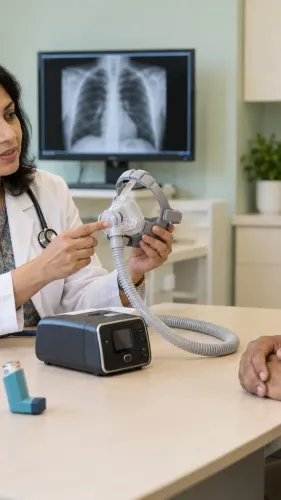
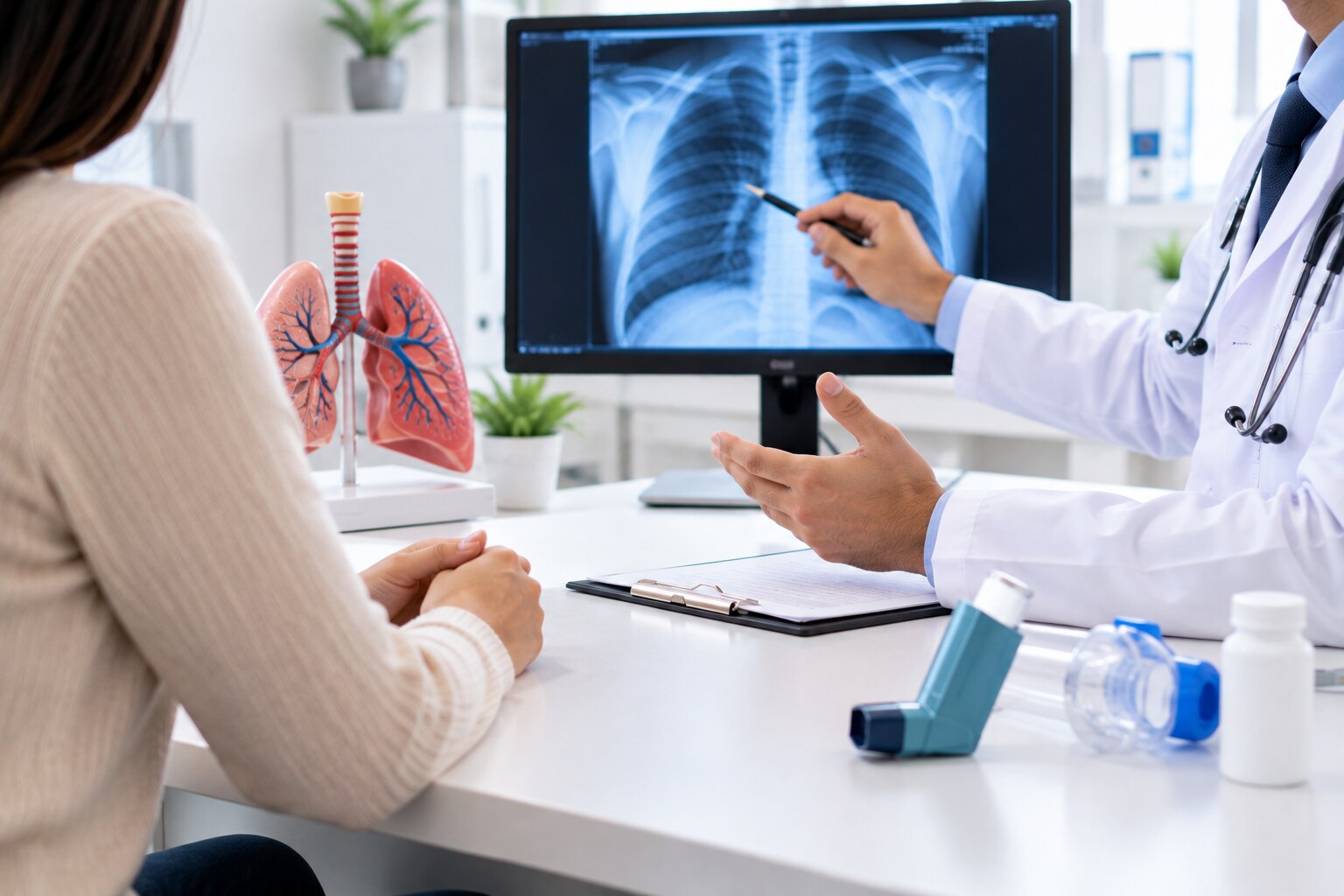
Cough, wheezing and breathlessness can come from asthma, acute bronchitis, pneumonia, chronic bronchitis or COPD, and symptoms alone cannot reliably separate them. You will learn how a chest specialist evaluates these conditions, which tests guide treatment, when care becomes urgent and how to prepare for a useful consultation.
Key takeaways
- Spirometry helps confirm airflow obstruction in asthma and COPD.
- Fever, chest pain and oxygen levels help assess possible pneumonia.
- Bring medication names, previous test reports and your symptom timeline.
- Seek urgent care for severe breathlessness, blue lips or confusion.
How a chest specialist separates asthma, bronchitis, pneumonia and COPD
The same cough or breathlessness can reflect airway narrowing, infection, mucus production or damaged lung tissue, so a chest specialist matches the symptom pattern with examination and objective tests.
| Condition | Clues | What confirms or supports it |
|---|---|---|
| Asthma | Variable wheeze, chest tightness, cough or breathlessness; triggers and nighttime symptoms are common | Spirometry showing variable airflow limitation; in adults, FEV1 or FVC rising at least 12% and 200 mL after a bronchodilator supports the diagnosis |
| Acute bronchitis | Cough after a viral illness, often lasting 2–3 weeks | Clinical assessment; antibiotics usually do not shorten an uncomplicated course |
| Pneumonia | Fever, rapid breathing, low oxygen, focal chest findings or worsening weakness | Chest examination and, when indicated, a chest X-ray and blood tests |
| Chronic bronchitis | Cough with sputum for at least three months in each of two successive years | A clinical description that can coexist with COPD; it is not automatically COPD |
| COPD | Persistent breathlessness, cough or sputum with exposure risks | Post-bronchodilator spirometry showing FEV1/FVC below 0.70 |
Asthma symptoms alone do not establish asthma. For COPD diagnosis, symptoms and smoking history alone are insufficient; spirometry is essential.
Seek prompt care for severe breathlessness, blue lips, confusion, coughing blood, chest pain, inability to speak full sentences, low oxygen readings or rapidly worsening symptoms. Repeated antibiotics or steroids without a firm diagnosis can delay evaluation for heart disease, tuberculosis, bronchiectasis, pulmonary embolism or lung cancer.
What happens during the first consultation and which tests matter
The first consultation identifies likely causes through symptom history, smoking and occupational exposure, medication review, chest examination and pulse oximetry. Explain when symptoms began, whether wheeze varies, sputum colour, fever, night waking, exercise limitation and previous attacks. Bring inhalers, prescriptions and earlier scan or spirometry reports.
Tests answer a specific uncertainty rather than repeat antibiotics or steroids. Spirometry before and after a bronchodilator is central: COPD requires a post-bronchodilator FEV1/FVC below 0.70; asthma is supported by an increase in FEV1 or FVC of at least 12% and 200 mL. A chest X-ray looks for pneumonia, collapse, cancer or another structural cause.
Blood tests, sputum culture, viral testing, CT, ECG or echocardiography follow the findings and risk.
| Test | What it shows | When it matters |
|---|---|---|
| Spirometry with bronchodilator | Fixed or variable airflow limitation | Suspected asthma or COPD |
| Chest X-ray | Infiltrate or other chest abnormality | Fever, focal signs, persistent cough or suspected pneumonia |
| Blood gas | Oxygen and carbon-dioxide levels | Severe breathlessness, low saturation or respiratory failure |
| Sputum or blood culture | Infectious organism | Severe pneumonia, treatment failure or unusual exposure |
Acute bronchitis often needs no imaging or antibiotics when examination and oxygen levels are reassuring. Seek prompt assessment for coughing blood, chest pain, confusion, blue lips, inability to speak full sentences, severe or rapidly worsening breathlessness, or a low oxygen reading; these findings can signal pneumonia, pulmonary embolism, heart disease or another emergency.
How treatment changes between asthma, COPD, bronchitis and pneumonia
The same breathlessness does not call for the same treatment. Asthma involves variable airway narrowing, COPD involves persistent airflow limitation, acute bronchitis is usually viral airway inflammation, and pneumonia infects lung tissue.
| Diagnosis | Usual treatment focus | Why treatment changes |
|---|---|---|
| Asthma | Controller inhalers containing inhaled corticosteroids, plus an ICS-containing reliever strategy | Anti-inflammatory treatment reduces future attacks; relying on reliever inhalers alone leaves inflammation untreated |
| Acute bronchitis | Fluids, rest and symptom relief; antibiotics are usually unnecessary | A virus will not respond to antibiotics, while unnecessary courses cause side effects and resistance |
| Pneumonia | Antibiotics when bacterial infection is suspected, with oxygen and hospital care if gas exchange fails | Infection in the air sacs can lower oxygen and become life-threatening |
| COPD | Long-acting bronchodilator inhalers, selected steroids or antibiotics during exacerbations, and pulmonary rehabilitation | Treatment targets persistent obstruction; antibiotics are not automatic, and other causes such as heart failure or pulmonary embolism need consideration |
Before escalating asthma or COPD medication, have a clinician watch your inhaler technique. Correct inhaler technique, spacer use with compatible metered-dose inhalers, and adherence action plans can fix apparently uncontrolled symptoms without adding unnecessary drugs.
A nebuliser changes how medicine is delivered, not which diagnosis you have. Severe attacks may need repeated nebulised bronchodilators, but worsening fatigue, confusion or failing oxygen levels requires hospital respiratory support. In COPD exacerbations with risk of carbon-dioxide retention, oxygen is titrated to 88–92%; uncontrolled high-flow oxygen can worsen retention.
Recovery, prevention and long-term monitoring after respiratory illness
After pneumonia or an exacerbation, complete the prescribed treatment and increase activity gradually instead of returning immediately to heavy exertion. Arrange review if cough, wheeze, fever or breathlessness persists, because repeated antibiotics or steroids can mask heart disease, pulmonary embolism, tuberculosis or another cause.
Seek urgent care for severe breathlessness, blue lips, confusion, chest pain, coughing blood, inability to speak full sentences, a rapidly worsening condition or a persistently low oxygen reading. Noninvasive ventilation helps selected patients with acute COPD and high carbon dioxide, but it cannot replace intubation when the airway is unprotected or deterioration continues.
Reduce future attacks with these measures:
- Smoking cessation: use counselling and approved medicines rather than relying on willpower alone.
- Vaccination: ask which influenza, COVID-19 and pneumococcal vaccines suit your age and conditions.
- Indoor-air control: remove smoke, mould and strong fragrances, and improve ventilation during cooking.
- Pulmonary rehabilitation exercise: follow an individually prescribed programme combining exercise training, education and behaviour change after you are clinically stable.
- Infection prevention: wash hands, avoid close contact with sick people and follow your clinician’s plan for early symptoms.
For asthma, record symptoms, reliever use and peak-flow readings when advised, and check inhaler technique at each review. For COPD, schedule spirometry and assess flare-ups, activity tolerance and oxygen levels when stable. Long-term oxygen requires documented chronic severe resting hypoxaemia; breathlessness alone is not enough.
How to choose a chest specialist and prepare for the appointment
Compare specialists on diagnostic skill, follow-up and emergency capability—not on a clinic title alone. Ask who performs spirometry interpretation, watches inhaler technique, manages severe asthma and COPD exacerbations, and refers patients to pulmonary rehabilitation when appropriate.
| Specialist feature | What to compare | Why it matters |
|---|---|---|
| Objective testing | Spirometry interpretation, bronchodilator testing and pulse-oximetry review | Symptoms alone cannot confirm asthma or COPD |
| Treatment review | Inhaler technique, adherence, smoking and workplace exposure assessment | Poor technique can look like treatment failure |
| Escalation care | Access to critical respiratory care and non-invasive ventilation | Selected patients with acute hypercapnic respiratory failure need rapid support |
| Follow-up | Written action plans, repeat testing and rehabilitation referral | Reduces preventable deterioration after pneumonia or an exacerbation |
Bring the records that let the specialist see change over time:
- Previous spirometry, chest X-rays, CT scans and blood-test reports
- A complete medicine list, including inhalers, doses, antibiotics and allergies
- Hospital discharge papers, oxygen readings and records of COPD exacerbations or pneumonia
- A symptom timeline, smoking history, workplace exposures and the number of reliever doses used
Choose emergency care instead of an outpatient appointment for severe breathlessness, blue lips, confusion, inability to speak full sentences, coughing blood, chest pain, a very low oxygen reading or rapid worsening. Non-invasive ventilation is not a safe substitute for urgent hospital treatment when you cannot protect your airway or are deteriorating.
Galaxy Chest & Multi Specialty Hospital Pvt Ltd is relevant when your assessment may require coordinated airway procedures or critical respiratory care rather than a routine consultation.
Frequently asked questions
How does a chest specialist distinguish asthma, bronchitis, pneumonia and COPD?
The specialist compares your symptom pattern, medical history, chest examination and objective tests. Spirometry helps assess airflow obstruction, while fever, oxygen saturation, chest findings and chest imaging help evaluate infection or lung changes.
What happens during the first chest specialist consultation?
You discuss when symptoms began, triggers, smoking or occupational exposure, previous illnesses and current medicines. The examination may include oxygen saturation, respiratory rate, chest auscultation and tests such as spirometry, a chest X-ray or blood tests when indicated.
How does treatment differ between asthma, COPD, bronchitis and pneumonia?
Asthma treatment focuses on controlling airway inflammation and preventing attacks. COPD care combines inhaled medicines, exposure reduction and rehabilitation. Acute bronchitis is usually managed with supportive care unless another cause is found, while pneumonia requires assessment for the appropriate antimicrobial and level of monitoring.
How can you support recovery and prevent future respiratory illness?
Use inhalers exactly as prescribed, complete prescribed treatment, avoid smoke and irritants, keep recommended vaccinations up to date, and attend follow-up testing. A written action plan helps you respond early to worsening symptoms.
How should you prepare for an appointment with a chest specialist?
Bring your medication list, inhalers, previous reports, imaging discs, allergy history and a record of symptom timing. Note triggers, fever readings, smoking exposure, nighttime symptoms and how far you can walk before becoming breathless.