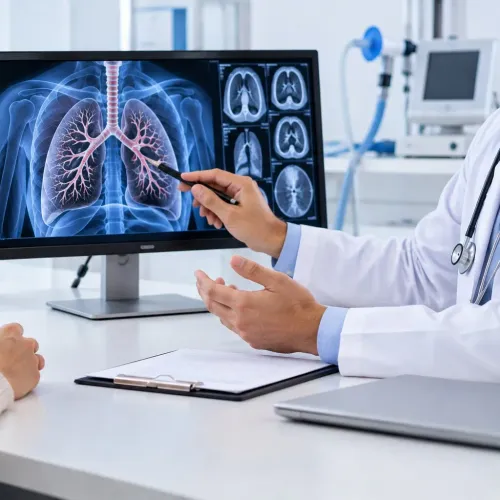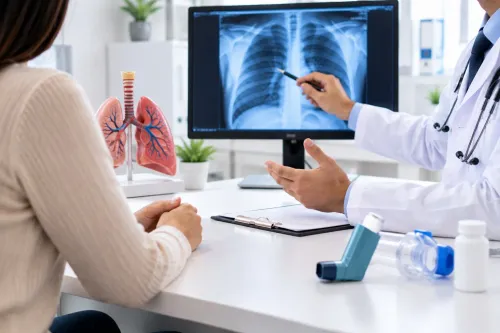

Chest pain can signal a heart emergency, while a tracheal tumour more often causes progressive breathing or voice symptoms that are mistaken for asthma or infection. You will learn when to seek emergency care, which specialist should lead the evaluation, how doctors assess sleeve-resection suitability, and what to take to a consultation in Trichy.
Key takeaways
- Seek emergency care for sudden severe chest pain or breathing problems.
- See a thoracic surgeon with airway and tracheal tumour experience.
- CT imaging, bronchoscopy and lung testing guide sleeve resection decisions.
- Compare surgery, stenting, airway procedures and radiotherapy with your specialist.
When chest pain needs emergency care instead of a surgical consultation
Do not wait for a tracheal resection consultation if chest pain is severe, sudden, or accompanied by breathing or circulation problems. Call emergency services or go to an emergency department.
Seek emergency care immediately for:
- Pressure-like pain spreading to your arm, jaw, or back
- Sweating or fainting
- Severe breathlessness or blue lips
- Coughing blood
- Stridor that is rapidly worsening
- Sudden, intense chest pain
Chest pain does not establish a tracheal tumour. Doctors must first assess a heart attack, pulmonary embolism, aortic emergency, or severe airway obstruction because each can become fatal without rapid treatment. Do not drive yourself if you feel faint, severely breathless, or confused.
A sudden deterioration after doctors have identified an airway lesion is also an emergency, even when you already have a surgical appointment. Airway narrowing can worsen quickly, and a previously arranged consultation does not provide immediate airway, cardiac, or circulatory support.
Stable symptoms that progress gradually can be assessed through a planned specialist appointment only after urgent warning signs have been excluded.
A search for a chest pain doctor tracheal sleeve resection in Trichy should never delay emergency cardiac or respiratory care; the search can continue after you are medically stable and the immediate cause of chest pain has been evaluated.
Which specialist should evaluate suspected tracheal disease?
A chest pain doctor is not automatically the right first clinician for suspected tracheal disease. Choose the specialist according to the dominant symptom and urgency.
| Role | Main responsibility | When to seek this specialist |
|---|---|---|
| Emergency physician | Stabilises acute chest pain, severe breathlessness, blue lips, haemoptysis or sudden stridor | Immediately, especially if symptoms worsen quickly |
| Cardiologist | Investigates pressure-like pain, exertional symptoms, fainting and cardiac risk | When symptoms suggest heart disease |
| Pulmonologist or interventional pulmonologist | Evaluates central-airway symptoms and arranges bronchoscopy | For persistent airway symptoms or abnormal imaging |
| Thoracic surgeon | Decides whether airway reconstruction is technically possible | After imaging and bronchoscopy define the lesion |
| Oncologist | Plans radiotherapy or systemic treatment after pathology and staging | When cancer treatment extends beyond surgery |
A central-airway tumour can cause progressive breathlessness, a fixed or monophonic wheeze that does not improve with asthma treatment, stridor, persistent cough, coughing blood, recurrent pneumonia, voice change or difficulty swallowing. Seek airway imaging or specialist review when symptoms remain localized, persist despite treatment, or repeatedly return.
These tumours are mistaken for asthma because narrowed tracheal airflow produces wheeze. Cough and infection-like symptoms can lead to bronchitis or recurrent-pneumonia treatment while the obstruction continues. A bronchoscopy and suitable airway imaging can reveal the cause.
Searching for “chest pain doctor tracheal surgery” does not identify a complete treatment pathway. A pulmonologist, interventional pulmonologist, thoracic surgeon, radiologist, pathologist, anaesthetist and oncologist may need to coordinate; one clinician cannot replace a shared-airway team.
What testing determines whether sleeve resection is possible?
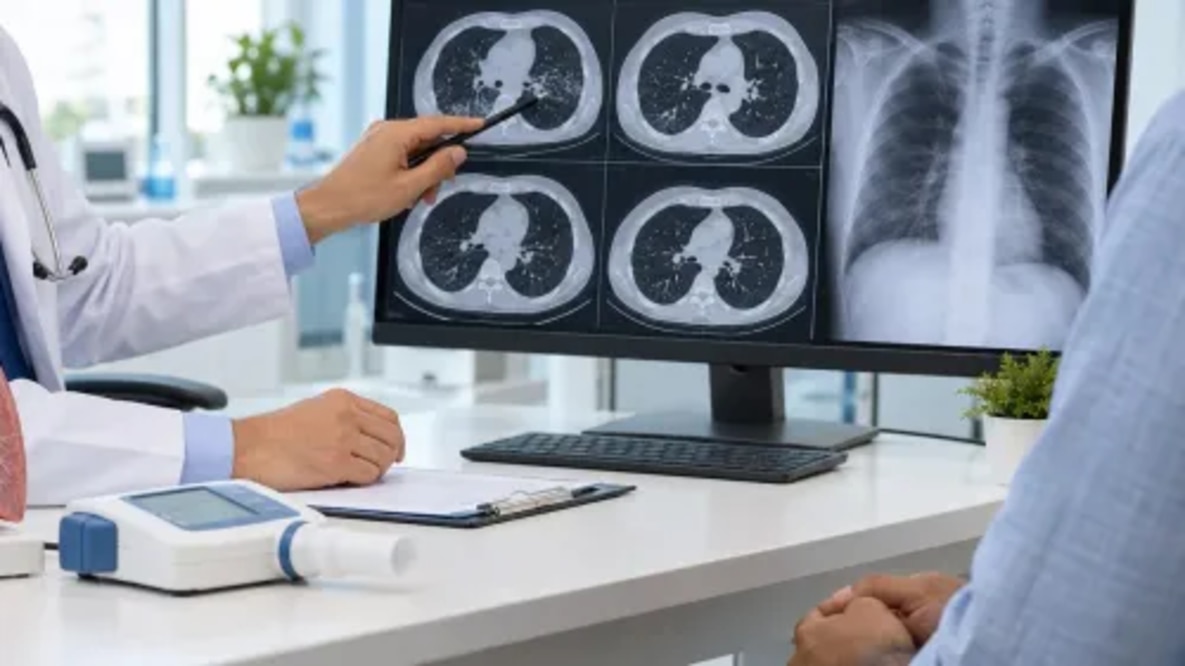
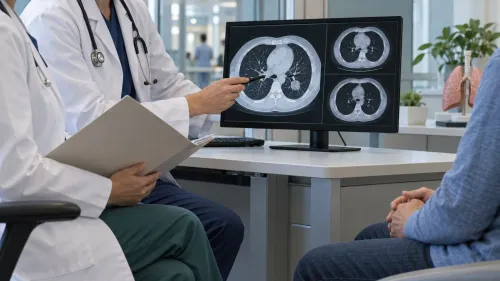
Anatomical suitability depends on whether the diseased airway can be removed and the healthy ends joined without excessive tension or loss of blood supply. A tracheal resection consultation usually starts with a contrast-enhanced CT of the neck and chest, followed by bronchoscopy to measure the tumour’s exact location and length.
Obtain tissue sampling when safe, and stage lymph-node or distant spread; add PET-CT when malignancy or metastatic disease is suspected.
The team assesses distance from the vocal cords and carina, tumour length, main-bronchus involvement, cartilage invasion, spread beyond the tracheal wall, histology, and the possibility of a well-perfused, tension-free join. There is no universal safe centimetre threshold: cervical or hilar release manoeuvres and individual anatomy change what is achievable.
Bring CT images, bronchoscopy reports and images, pathology slides or blocks, pulmonary-function results, medication and anticoagulant lists, and a symptom timeline.
Tracheal sleeve resection in Trichy should be discussed with a team that can evaluate the shared airway and reconstruction:
| - Tracheal sleeve resection | Removes the diseased tracheal segment and joins the two healthy ends with an end-to-end anastomosis | Considered when the lesion is localized and reconstruction is feasible |
|---|---|---|
| - Sleeve lobectomy | Removes a lung lobe and reconnects the remaining bronchus | Used for selected lung-lobe tumours, not isolated tracheal disease |
How doctors choose surgery, airway intervention, radiotherapy or stenting
Sleeve resection is not automatically the best treatment.
For a resectable primary tracheal malignancy, removing all visible disease with negative margins is generally the potentially curative option, but doctors also assess anaesthesia fitness, tumour histology, lymph-node or distant spread, location and length, and whether reconstruction can be completed without excessive tension and with adequate blood supply.
| Option | What it does | When it applies |
|---|---|---|
| Sleeve resection | Removes the diseased segment and joins healthy airway ends | Resectable tumour in a patient fit for surgery |
| Endoscopic debulking or laser | Reopens the airway quickly but may leave tumour behind | Immediate obstruction relief or selected treatment |
| Stent | Holds the airway open without removing tumour | Bridge to definitive treatment or palliation; risks migration, mucus plugging, granulation tissue and infection |
| Radiotherapy or chemotherapy | Treats tumour without airway reconstruction | Unresectable disease, selected histology or inability to undergo surgery |
| Tracheostomy | Creates emergency or longer-term airway access | Airway rescue or bridge, not usually tumour treatment |
More extensive airway surgery is considered when the lesion reaches the carina, main bronchi or adjacent structures. The trade-off is serious risk: anastomotic leak or dehiscence, narrowing, bleeding, infection, respiratory failure and recurrent-laryngeal-nerve injury causing voice change.
Healing becomes less reliable when the join is under tension or has poor blood supply. Prior radiation, steroid exposure, poor nutrition and major comorbidity add risk. A tracheal tumour surgery in Trichy consultation should therefore compare airway control, cancer control and recovery—not just ask whether an operation is available.
How to choose and prepare for a Trichy airway-surgery consultation
A useful tracheal resection consultation tests the whole pathway, not only a surgeon’s opinion. For tracheal tumour surgery in Trichy, confirm that diagnosis, staging, airway control, reconstruction and postoperative rescue are available through one coordinated team.
- Ask whether the centre has an interventional pulmonologist, thoracic surgeon, thoracic anaesthesia, intensive-care support, rapid pathology, multidisciplinary tumour review, rigid bronchoscopy, airway stenting and an emergency airway-rescue plan.
- Ask whether surgery aims to cure, what a close or positive margin would change, whether endoscopic treatment or radiotherapy is safer, how long airway protection and recovery may take, and which complications require immediate return.
| Option | Main purpose | Key limitation |
|---|---|---|
| Sleeve resection | Remove a resectable tumour with negative margins | Requires suitable anatomy and fitness for major surgery |
| Endoscopic treatment or stenting | Relieve obstruction quickly or bridge to definitive treatment | Does not reliably remove the tumour; stents can migrate, block with mucus or cause infection |
| Radiotherapy | Treat selected unresectable disease or patients unable to undergo surgery | May not provide immediate airway relief and can affect later healing |
Galaxy Chest & Multi Specialty Hospital Pvt Ltd can be considered when you want coordinated respiratory, interventional pulmonology and thoracic-surgery assessment in Trichy; ask whether the team can connect each step rather than simply label the symptom.
Bring CT scans on image media, reports, bronchoscopy images, pathology slides or blocks, pulmonary-function results, medication and anticoagulant details, allergies, prior radiation or steroid history, and a timeline of breathlessness, wheeze, infections, haemoptysis, voice change and chest pain.
Frequently asked questions
When should chest pain go to emergency care instead of a tracheal resection consultation?
Go to an emergency department or call emergency services for severe or sudden chest pain, breathing difficulty, fainting, sweating, confusion, blue lips or signs of circulation problems.
Which specialist evaluates suspected tracheal disease?
Ask for evaluation by a thoracic surgeon, with input from a pulmonologist or interventional pulmonologist when airway disease or a tracheal tumour is suspected.
What tests determine whether tracheal sleeve resection is possible?
Doctors use contrast CT of the chest and airway, bronchoscopy with biopsy when needed, pulmonary function tests and an assessment of tumour location, length, spread and your fitness for surgery.
How do doctors choose between sleeve resection, stenting, airway intervention and radiotherapy?
The choice depends on the diagnosis, airway blockage, tumour extent, symptoms, lung function, surgical fitness and whether treatment aims to remove disease, reopen the airway or control growth.
Keywords